How to Find and Vet Xiaohongshu Influencers in 2026
TLDR
The working loop: define the creator profile, discover candidates across five sources (native search, competitor notes, Pugongying filters, third-party databases, MCN rosters), build a shortlist at three vetted candidates per final slot, score them on data rather than follower counts, then book compliantly through Pugongying (蒲公英). The two red flags that cost foreign brands most, named now: off-platform cooperation offers, and Shutiao boost fees bundled invisibly into quotes. And one rule before anything else: don't DM creators cold. Direct-message deal-making triggers platform risk controls, can't be declared, and carries all the dispute risk with none of the protection.
Finding creators on Xiaohongshu is a data exercise wearing a browsing costume. The brands that treat it as scrolling end up with a shortlist of famous accounts; the ones that treat it as vetting end up with creators whose audiences actually buy. This is the process we run for overseas brands, from profile definition to signed order, with the scorecard we use in the middle. Strategy and campaign models live in our influencer marketing guide; this page is the how.
Rather have the shortlist built for you? Our team vets creators daily.
Define the creator profile before searching
Write the target profile first: vertical, audience fit, follower band, content format, price band. Searching without it produces a list of accounts you recognize, which is precisely the wrong list; recognition means you're their audience, not that your buyers are.
The profile template we use has six lines: category vertical (as the platform slices it, not as your org chart does), buyer persona the audience must match, follower band per the campaign mix, format (image-text, video, or livestream-capable), price band from the tier table, and one line of disqualifiers (competitor exclusivity, past category violations, tone mismatches). Six lines, and every later argument about a candidate resolves against them instead of against opinions.
Then apply the 3x shortlist rule: three vetted candidates for every final slot you plan to book. The attrition is structural, not pessimism: one of three falls to calendar conflicts, vetting failures, or a negotiation that doesn't close, and a 20-creator wave planned from a 20-creator shortlist launches at 13. Plan the funnel, not the wish list.
Discover candidates: the five sources
Discovery is wider than the marketplace, and each source finds a different kind of creator:
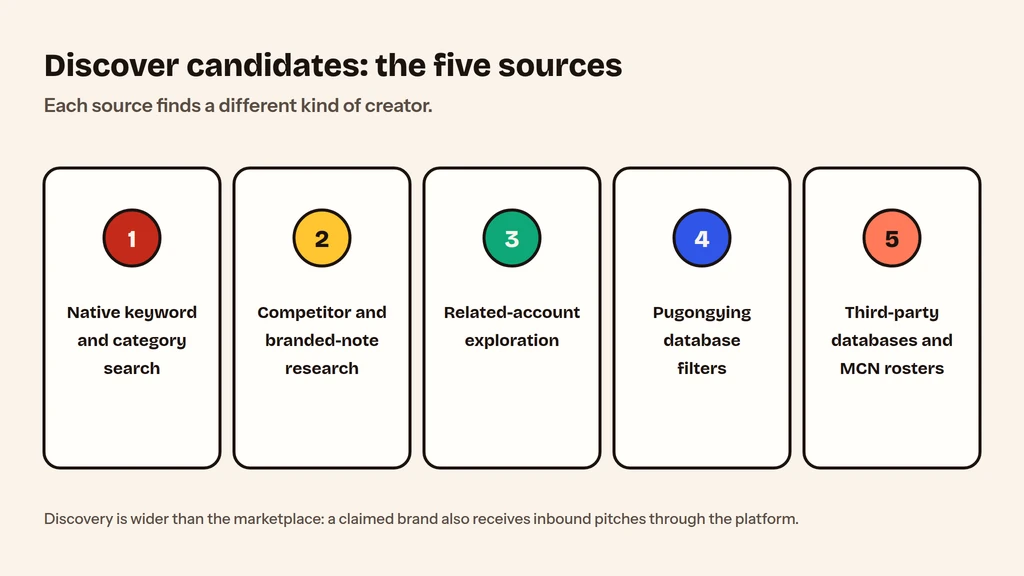
- Native keyword and category search. Search your category terms the way a buyer would; the creators ranking are the ones the algorithm already trusts for your topic.
- Competitor and branded-note research. Who published your competitors' declared notes, and whose organic mentions performed? Their audiences are pre-qualified.
- Related-account exploration. Every strong candidate's profile leads to similar accounts; the platform does the clustering for you.
- Pugongying database filters. Vertical, follower band, price band, historical cooperation data, and since the 2025-26 updates, intent-cooperation tags: creators marking the categories and brands they want to work with, which turns some discovery inbound.
- Third-party databases and MCN rosters. Wider nets, useful once you can vet what they return.
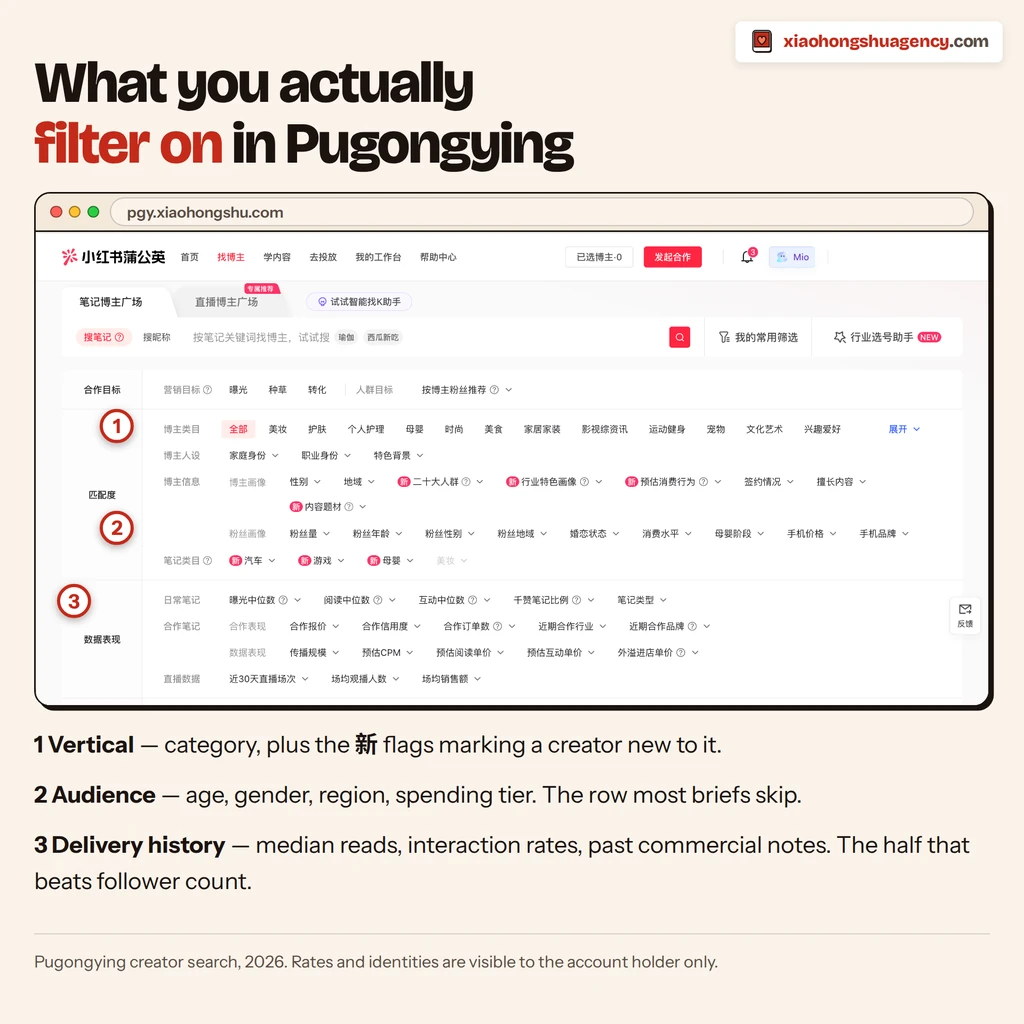
Prerequisite box before you can book anything: brand-side ordering runs from a verified professional account whose entity matches or is affiliated with the trademark holder, so the verification and claiming chain comes first. A claimed brand also receives inbound pitches through the platform, which seeds discovery without searching at all.
Vet with the scorecard: data over follower counts
The scorecard covers six dimensions: audience fit, content fit, engagement quality, commercial-note history, pricing, and compliance risk. Score each candidate before anyone negotiates, and the budget conversation gets shorter and cheaper.
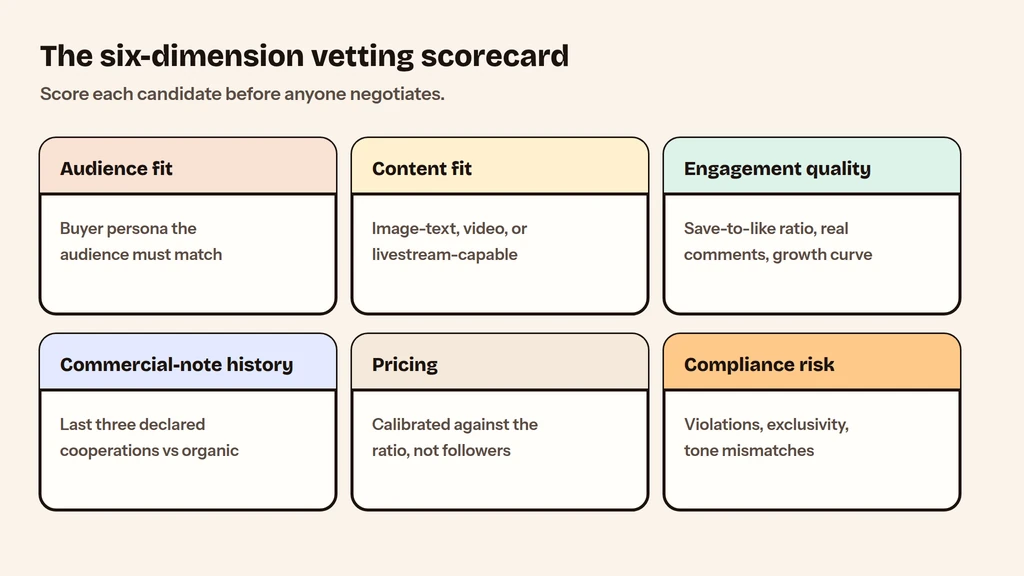
Engagement quality is where fakes die, and where the tooling earns its keep. The tells we weight: save-to-like ratio (saves are the purchase-intent signal; a like-heavy, save-light account entertains rather than sells), real-comment share (ask candidates for the real-comment proportion of their last 30 days' engagement; the confident ones have it), fan-profile coherence (a beauty account whose followers are 40% male bought some of them), and growth-curve shape (organic growth climbs; purchased growth staircases).
Two warnings from the trenches. MCN-provided data arrives polished: mutual-boost groups (互暖群) inflate interactions across member accounts, so a dashboard screenshot from the MCN is a starting claim, not evidence. And the third-party layer (Qiangua 千瓜, Xinhong 新红) tightened under 2024 privacy rules; some features, creator contact data among them, now need business-license verification, which is why overseas brands typically work through agency-held tool accounts rather than subscribing directly.
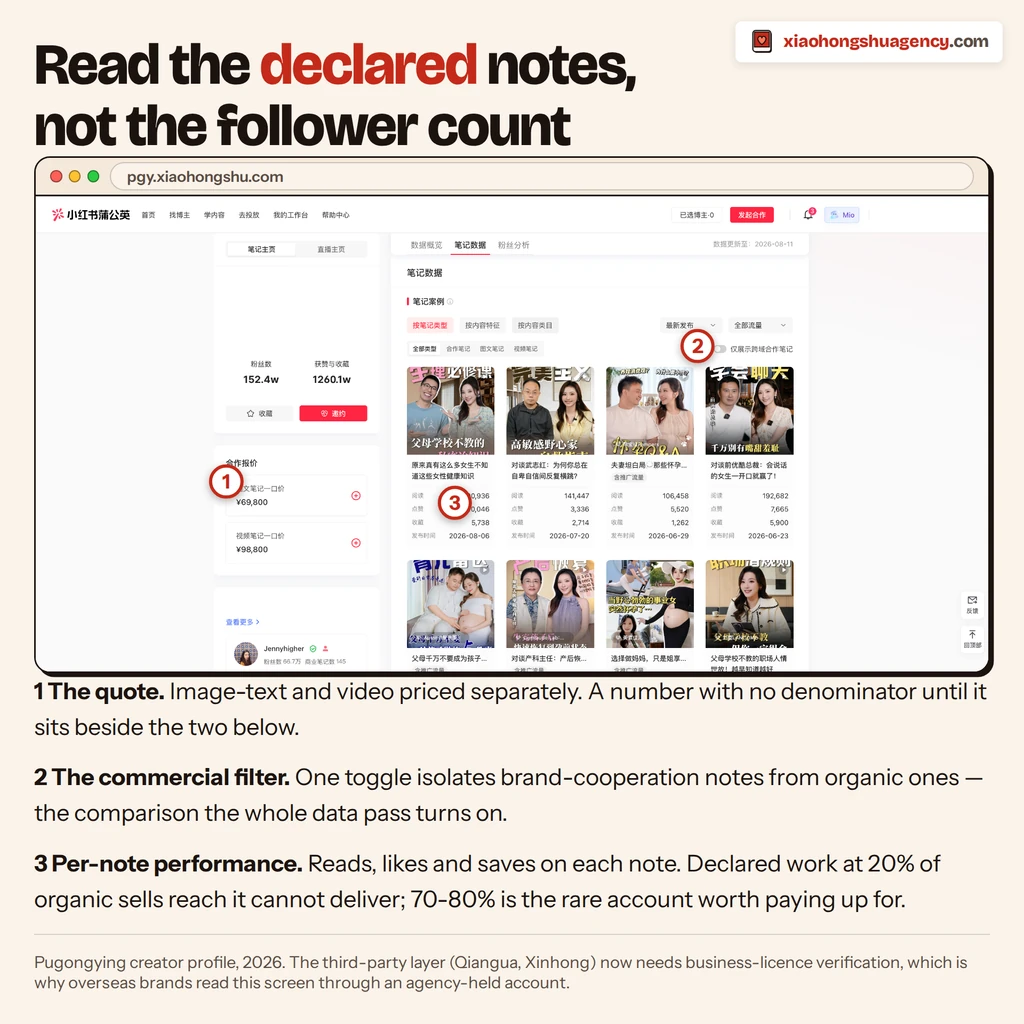
Commercial-note history deserves its own pass inside the scorecard. Pull the candidate's last three declared cooperations and read them as a buyer would: did the sponsored notes hold anywhere near the account's organic engagement, or did the audience smell the ad and leave? A creator whose declared notes run at 20% of organic performance sells reach they can't deliver to brands; one whose sponsored work holds 70-80% of organic is the rare account worth paying up for. Pricing calibrates against that ratio, not against followers.
Our position after years of this: the data pass is where the budget is won. Two accounts with identical follower counts routinely differ several-fold in delivered value, and thirty minutes with the scorecard finds the difference before the invoice does.
MCN, direct, or platform: choosing how to book
Every compliant deal closes through a Pugongying order regardless; the choice is who manages the relationship around it. Direct is cheapest and hardest: delayed delivery and quality misses have no recourse beyond the order terms, and managing creators in Chinese from another timezone is its own job. MCN adds roster access and management for a margin; before signing one, take the due-diligence list: signed-roster proof, violation-free declaration, historical brand cases, and a straight answer on data practices. TP and agency arrangements bundle booking into wider operations, the usual route for overseas brands.
For a first campaign run from abroad, managed beats direct every time; direct deals belong to teams with an in-house operator re-booking creators they already know.
Brief and negotiate: two documents, two jobs
The brief protects compliance and the negotiation protects budget; they fail separately.
The brief. Write product truth and creative boundaries, then let the creator's voice do the work. Attach the banned-claims list explicitly: no 最 ("the most"), no "No. 1," no therapeutic implications, because those die in review or take the note down after it publishes. Use Pugongying's content co-editing feature to align drafts before publication instead of discovering the miss after. Contracts run bilingual, with portrait-rights term and usage scope spelled out.
The negotiation. Listed rates are opening positions: the listed-to-closed spread ran about 15 points in 2025 and has widened to 15-20 in 2026, touching 25 in some categories (third-party monitoring plus agency field data). Negotiate packages with staged deliverables rather than per post, and settle the tax convention upfront: the platform withholds creator income tax on declared deals, so agree whether quotes are gross or take-home before signing, not after the creator's first payout surprise. Payment routes through the platform (agency prepaid accounts are typical for overseas brands), with FX costs sitting on the brand side. Full price ranges by tier: our KOL cost breakdown.
Timeline for planning: shortlist to live note averages 7 to 14 days including brief alignment, creation, review and revisions, with 21 days for complex productions. The vetting you did earlier is what keeps this window from doubling, because unvetted creators reveal their problems mid-production, at your deadline's expense.
Red flags and rejection rules
Reject on any of these four, whatever the account's numbers:
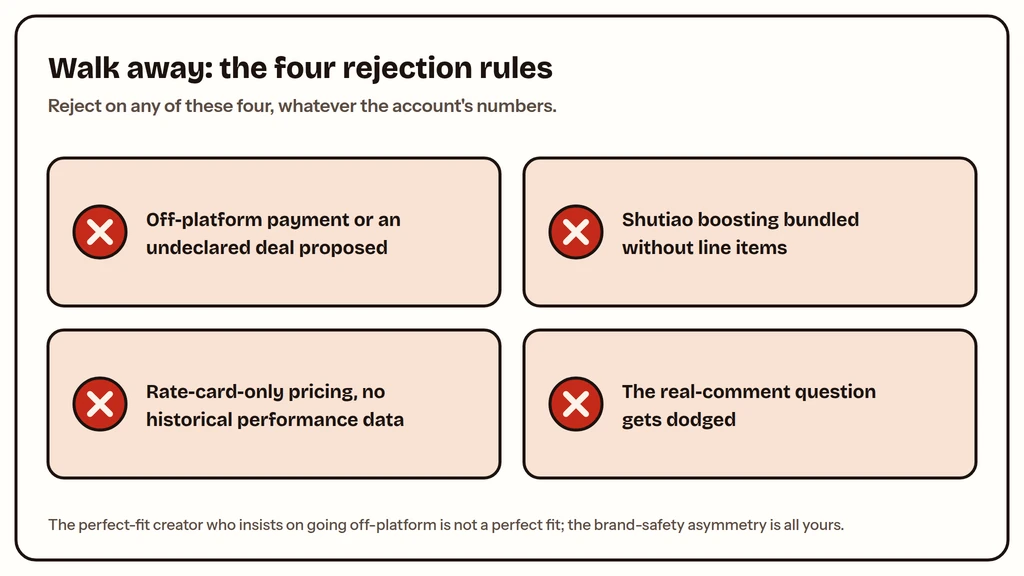
Walk away when: the creator or MCN proposes off-platform payment or an undeclared deal (the detection risk transfers to your brand); quotes bundle Shutiao boosting without line items; pricing comes rate-card-only with no historical performance data; or the real-comment question gets dodged. The perfect-fit creator who insists on going off-platform is not a perfect fit; the brand-safety asymmetry is all yours.
We can help
The scorecard is printable; the discipline to run it on forty candidates in Chinese is what brands actually buy from us. Our team maintains vetted creator pools by category, holds the tool accounts, and negotiates inside the spread with the tax convention already settled. Ask for a vetted shortlist: profile, scored candidates, closed-price estimates, and the calendar reality for your launch window.
FAQ: finding and booking creators
How many candidates should we shortlist per final slot?
Three. Calendars, vetting failures and stalled negotiations reliably remove two; a thinner funnel launches campaigns smaller than planned.
Can brands see a creator’s past sponsored-note performance?
Yes, that's Pugongying's historical cooperation data, plus third-party trend views. A creator or MCN unwilling to share commercial-note history is answering your question anyway.
Do Xiaohongshu creators work in English?
Rarely, and the ones who do still brief, draft and publish in Chinese. Plan for Chinese-language coordination through an agency, MCN or in-house operator.
What should an MCN provide before we sign?
Signed-roster proof, a violation-free declaration, historical brand cases with results, and clarity on how their engagement data is produced. Hesitation on any of the four is your answer.